outdoor living Roseville CA
Outdoor Living in Roseville & Rocklin: What Actually Survives the Heat
July 27, 2026
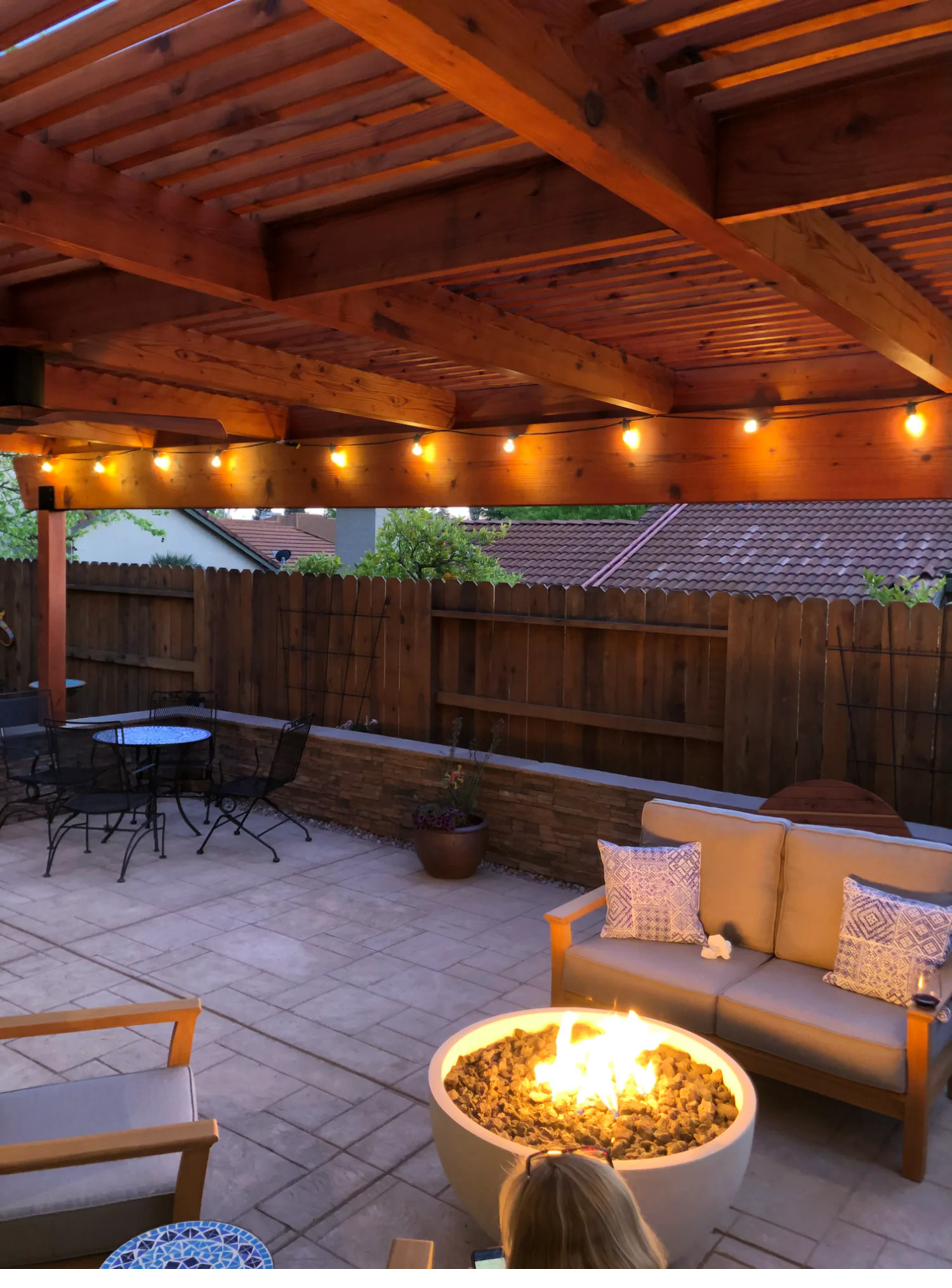
Every outdoor living project in Roseville and Rocklin is designed around a single fact: the Sacramento Valley gets genuinely, punishingly hot. Weeks above a hundred degrees are normal. Intense UV exposure runs from May through September.
Beautiful outdoor spaces that ignore this get used in April and October and sit empty the rest of the year. Here is what actually works.
Shade is the entire design problem
An unshaded patio in Roseville is unusable from roughly eleven in the morning until well after dinner for four months of the year. Shade is not a feature you add to an outdoor space — it is the thing that determines whether the space gets used.
Solid roof structures
A solid-roof cover attached to the house delivers complete shade, rain protection, and a place to mount fans and lighting. It is the most effective option and the most expensive — it is a structure, requiring footings, engineering, and a permit. It also darkens whatever interior rooms it adjoins, which is a real trade-off worth modeling before you build.
Louvered systems
Adjustable louvered roofs let you close for full shade or open for light. Excellent flexibility, higher cost, and moving parts that will eventually need service.
Pergolas
Traditional open pergolas provide partial, moving shade. Honest assessment: on a hundred-and-five-degree afternoon, partial shade is not enough to make a patio usable. Pergolas work well as a defining architectural element, over a space that has other shade, or with a proper shade fabric integrated.
Orientation
The cheapest shade strategy is placing the space correctly. A patio on the east side of the house is comfortable through the afternoon. The same patio on the west side bakes until sunset. This decision costs nothing at the design stage and cannot be undone afterward.
Materials that hold up here
Decking. Composite decking has improved substantially, but color and heat retention matter enormously in this climate. Dark composite can become genuinely too hot to walk on barefoot. Lighter colors and the better-quality capped composites perform far better. Natural hardwoods weather beautifully but require real maintenance under this much UV.
Hardscape. Stamped and colored concrete performs well and stays cooler than most decking. Pavers allow drainage and are individually replaceable, which matters on expansive soil that moves seasonally.
Fabric and finishes. Anything not rated for high UV will fade and degrade within a few seasons. Solution-dyed acrylic fabrics, powder-coated aluminum, and properly finished exterior-grade wood are worth the premium here in a way they are not in milder climates.
Outdoor kitchens: what people underestimate
Outdoor kitchens are the most requested and most frequently under-planned element:
- Gas. A built-in grill needs a properly sized line from the meter. This is not a small run.
- Electrical. Refrigeration, lighting, and outlets need dedicated circuits and GFCI protection. Title 24 governs outdoor lighting and any new electrical, so fixtures and controls have to be planned into the circuit design from the start.
- Water and drainage. An outdoor sink needs supply and drain, and the drain is the harder half.
- Ventilation. A grill under a solid roof needs proper clearance and ventilation. This is a safety requirement, not a preference.
- Winter. Outdoor plumbing needs to be freeze-protected. Valley winters are mild but not immune.
Drainage is where projects fail quietly
The foothills sit largely on expansive clay soil that swells with winter rain and shrinks in the dry summer. That movement cracks slabs, shifts pavers, and tilts retaining walls.
Correct drainage design — grade away from structures, proper base preparation, and where needed subsurface drainage — is the difference between a patio that looks the same in ten years and one that needs replacement in five. It is invisible work that adds cost and produces nothing you can photograph, which is exactly why cut-rate bids cut it first.
Permits
Roseville and Rocklin are incorporated cities with their own building departments; surrounding areas fall under Placer County. Attached covers, structures over certain sizes, gas, electrical, and plumbing all typically require permits. Detached structures below certain size thresholds sometimes do not — but that threshold varies by jurisdiction, so verify rather than assume.
What we would prioritize
If the budget will not cover everything at once, build in this order: shade structure first, then hardscape and drainage, then outdoor kitchen, then fire feature and finish lighting. Shade determines whether the space is usable at all; everything else improves a space you are already using.
See our outdoor living page for examples.
Related reading
- Expansive Clay Soil and Your Foundation: Building in the Sierra Foothills
- Title 24 and Your Remodel: The Energy Rules That Shape the Project
- Three Counties, Three Processes: Permits in Sacramento, Placer & El Dorado
Planning a project in the Folsom area?
Mohr Construction has been remodeling homes across Folsom, El Dorado Hills, Granite Bay, Roseville, Rocklin, Loomis, Fair Oaks, Orangevale, and Rancho Cordova since 2004 — and we have grown entirely through referrals. We communicate daily, we take on the complicated projects other builders pass on, and we do not cut corners.
Start a conversation about your project or try our remodel cost calculator to get a ballpark before you talk to anyone.